

Frequently asked questions about
Student Visas
-
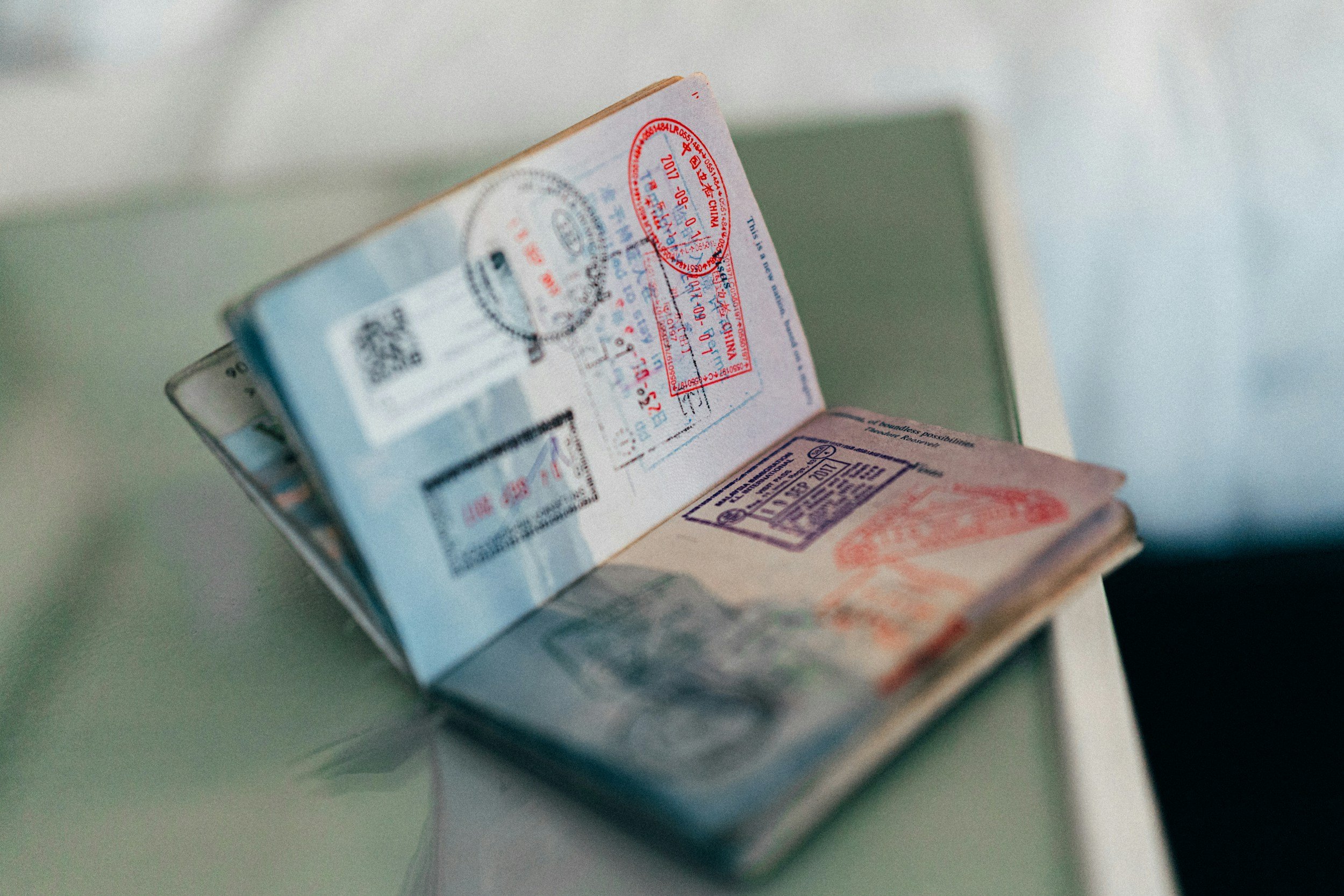
Yes. You must hold a passport in order to apply for a student visa. Some universities even require you to have a passport to submit your application.
If your passport is due to expire within the next six months to one year, you will also likely need to renew it to apply for a student visa.
-
Not at all! This is what visas and residence permits are for.
For international students, the main difference between a citizen and a non-citizen student is tuition prices. Students who hold EU/EEA or UK citizenship will typically pay a reduced tuition fee.
We know it can be a challenge to navigate the visa system, so if you have any questions or concerns about the process, the Skola team can help you research!
-
In most cases, students must apply for a long-term visa before arriving in Europe.
For US citizens, some countries may waive the requirement to obtain a visa in advance. In these cases, students will typically apply for a residence permit upon arrival.
If you hold a passport or are a citizen of an EU member state, you likely will not have to go through a visa or residence permit application process to live in other EU member states. However, you will have to register as a resident upon arrival. Due to Brexit, this privilege no longer applies to studying in the UK.
We strongly encourage you to thoroughly research the rules and deadlines for visa applications far in advance.
-
You will likely need to pay an administrative fee to apply for a student visa/residence permit. The cost of this will vary depending on the destination country and can range from under $50 up to $500 in extreme cases.
However, to qualify for a visa, you often have to prove that you have a certain amount of savings or other funds available to support yourself and your studies. This is known as a “Proof of Funds.” This amount can range from under $4,000 to over $10,000 for a one-year visa.
-
Typically, yes, student visas do allow international students to work part-time.
The amount of time you can work is typically around 20 hours per week, with certain countries allowing up to full-time (40h/week) during school breaks. Some countries may place restrictions, such as the job being relevant to the subject of your degree.
Some countries may also allow you to be self-employed part-time during your studies.
In order to remain on a student visa/residence permit, your studies must remain the primary purpose of your stay in that country.
-
A residence permit is often referred to colloquially as a visa, although these are technically two different things.
A visa is a permit inserted directly into your passport, granted by a consulate in the US. The purpose is to allow you to travel from the US to another country for a defined purpose (such as tourism, work, or studies) and stay for a predetermined amount of time.
A residence permit is applied for with the local authorities once you have already arrived abroad. It allows you to remain in the country for a defined purpose (such as work or studies) as a non-citizen for a predetermined amount of time. In the EU, you will receive a third-country national identity card, which is your legal form of identification while residing in that country.
Typically, after one year of living in a country, or sooner, you will qualify to switch your visa to a residence permit.
-
Often yes, but it depends on their age, how you are related, and the country you are moving to.
Every country has its own visa rules and legislation. The most common scenario is that your spouse and children can move with you through family reunification, as long as you can prove you can support them, as is the case in Belgium and the UK. You may be required to be studying at a post-graduate or doctoral level, which is the case in France and often the Netherlands. Some countries may not allow family reunification on a student visa at all or may require students to wait several years before bringing family, as is the case in Italy.
At the end of the day, the answer, unfortunately, is “it depends.”
-
The legal bond between an individual and his or her State (country), acquired by birth or naturalization, either by declaration, choice, marriage, or other means under national legislation.
-
Any person who is not a citizen of the European Union (EU).
-
People changing their residence to or from a given area, usually from one country to another, but may also take place within a single country.
-
The action by which a person establishes his or her usual residence in the territory of an EU Member State for a period that is, or is expected to be, of at least 12 months, having previously been usually resident in another Member State or a third country.
-
Any third-country national who has been granted long-term resident status in an EU member state.
Member States shall grant long-term resident status to third-country nationals who have already resided legally and continuously within their territory for five years. The issued long-term residence permit shall be valid for a minimum of five years.
A long-term resident is granted a set of uniform rights which are as close as possible to those enjoyed by citizens of the European Union.
-
A residence permit is any authorization valid for over three months, issued by the authorities of an EU Member State, that allows a third-country national to stay legally on its territory.
A document enabling residents to prove their legal status easily and immediately. It may come in the form of an ID card or a sticker in the permit holder’s passport.
A residence permit in one EU member state does not confer the right of residence in the other Member States.
-
People who are not citizens of the country in which they currently reside.